Freya Vogel · 2 September 2026
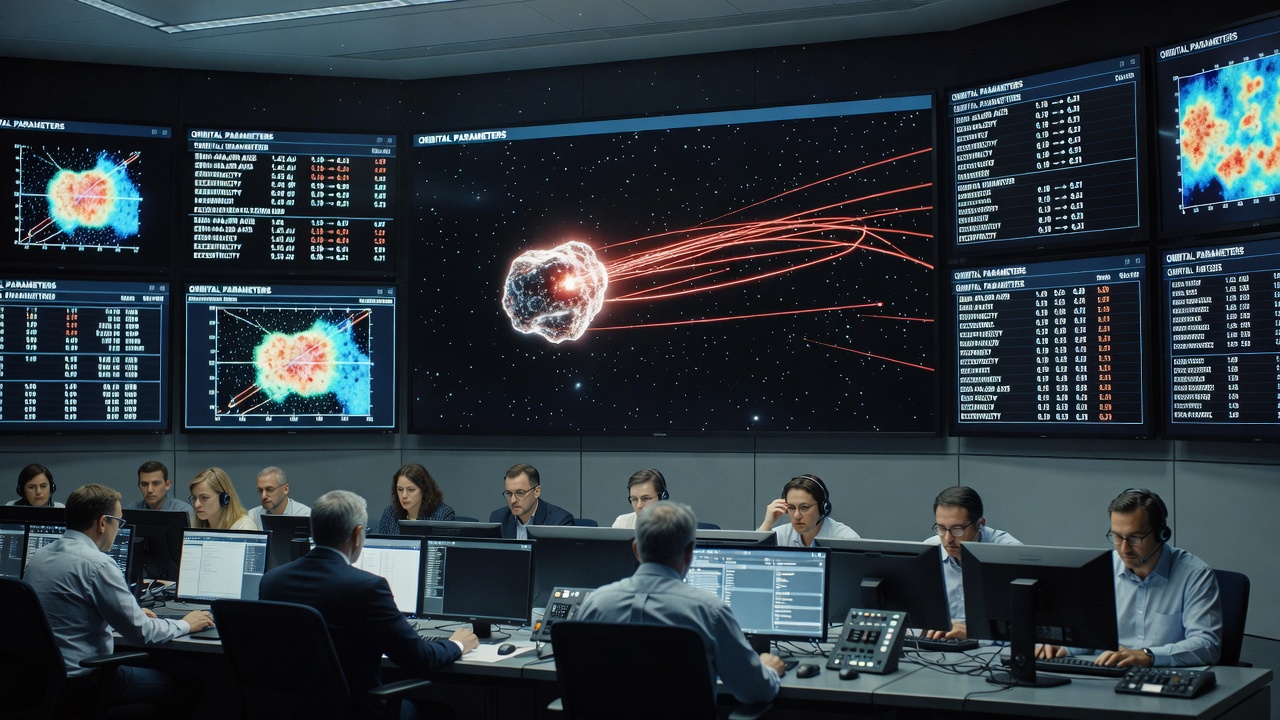
The European Space Agency (ESA) has been closely monitoring an asteroid that shows signs of a shifting orbital path. This phenomenon offers critical insights into the factors affecting asteroid trajectories in our solar system. Researchers are using advanced telescopes and computational models to track these changes precisely. Observations indicate that non-gravitational forces are at play, leading to gradual alterations in the asteroid's course. Such findings are essential for improving planetary defense strategies and understanding long-term orbital dynamics.
Initial detections occurred during routine surveys but follow-up data revealed unexpected deviations requiring refined predictions.
Key Factors Influencing the Orbit
The primary cause appears to be the Yarkovsky effect, resulting from uneven thermal radiation emitted by the rotating asteroid. Additional influences include gravitational interactions with planets like Jupiter and Mars. Students in orbital pathways programs study these effects through detailed case analyses and simulations to predict similar behaviors in other near-Earth objects. Data collection involves both optical and radar observations, providing a comprehensive view of the asteroid's physical properties and motion. Understanding these mechanisms is vital for accurate forecasting and educational training in the field of celestial mechanics and space situational awareness.
ESA's efforts are part of a larger initiative to catalog and characterize potentially hazardous asteroids. Accurate orbital predictions help in assessing impact risks and planning mitigation measures if necessary.
Integrating Findings into Education
This tracking mission serves as an excellent example for educational purposes at Orbital Pathways Education. It demonstrates the application of theoretical concepts in real-time scenarios, enhancing student engagement and understanding of complex orbital mechanics. Future missions may benefit from the methodologies developed during this project, fostering innovation in space science education globally. Courses incorporate live datasets to build expertise in trajectory modeling and risk evaluation for aspiring professionals.