Nils Hartmann · 2 September 2026
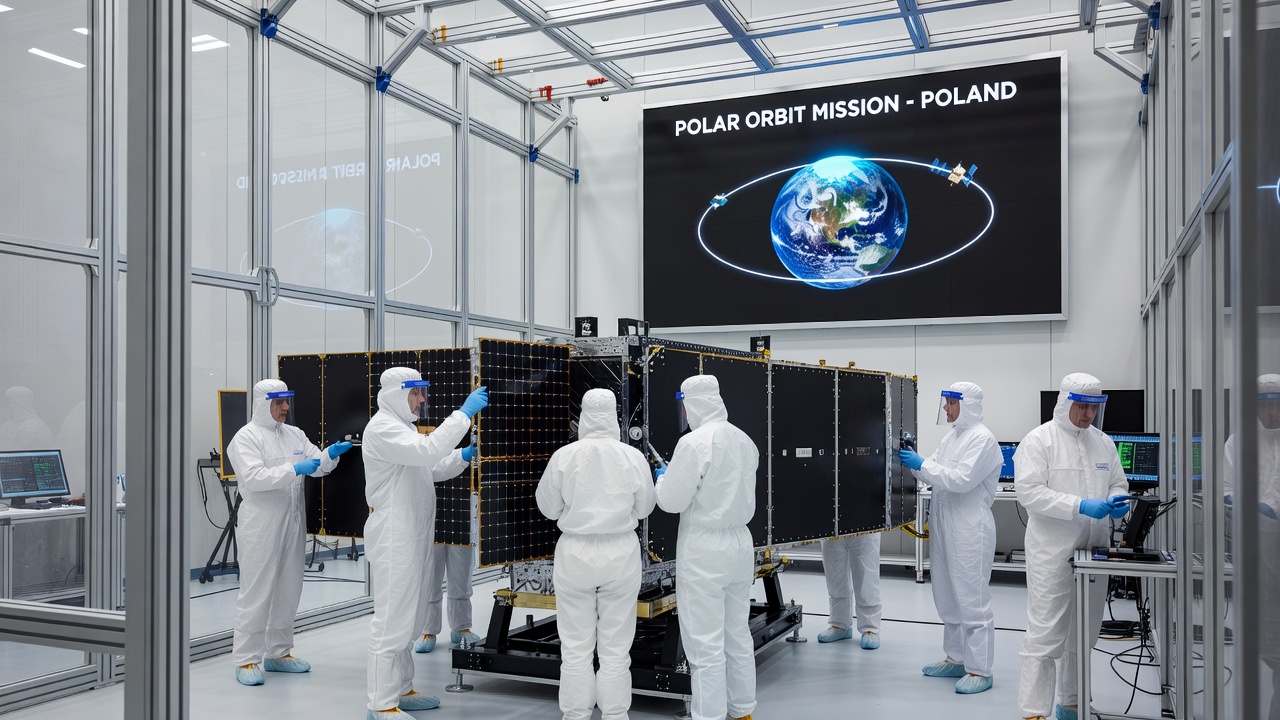
Poland has approved substantial government funding for a new satellite mission targeting polar orbit operations. The initiative focuses on enhanced Earth observation capabilities in high-latitude regions. Officials emphasize the mission's role in supporting climate research and environmental monitoring across Arctic and Antarctic zones.
Mission Objectives and Technical Scope
The satellite will carry advanced sensors for ice sheet analysis, atmospheric data collection, and maritime surveillance. Engineers plan a sun-synchronous orbit at approximately 600 kilometers altitude to ensure consistent imaging passes. Project timelines indicate a target launch window within three years, with domestic research institutions leading payload development. International partnerships may supplement ground station support and data processing frameworks. Budget allocations prioritize Polish aerospace firms for component manufacturing and integration testing.
Additional resources will fund training programs for satellite operators and data analysts. These efforts aim to build national expertise in orbital mechanics and remote sensing technologies. Polar orbit paths offer unique advantages for continuous coverage of polar environments, enabling frequent revisits compared to equatorial trajectories.
Educational Pathways and Workforce Development
Academic institutions across Poland will integrate mission data into curricula focused on orbital pathways and satellite systems. Students pursuing degrees in aerospace engineering and environmental science gain access to real-time datasets for research projects. Specialized courses will cover trajectory planning, payload calibration, and orbital debris mitigation strategies. Government agencies coordinate with universities to establish internship pipelines tied directly to mission operations.
Long-term goals include expanding Poland's capacity for independent space missions through sustained educational investment. The funding package supports scholarships and laboratory upgrades dedicated to polar orbit studies. Researchers expect the mission to generate open-access datasets that benefit global scientific communities while strengthening domestic technical skills.